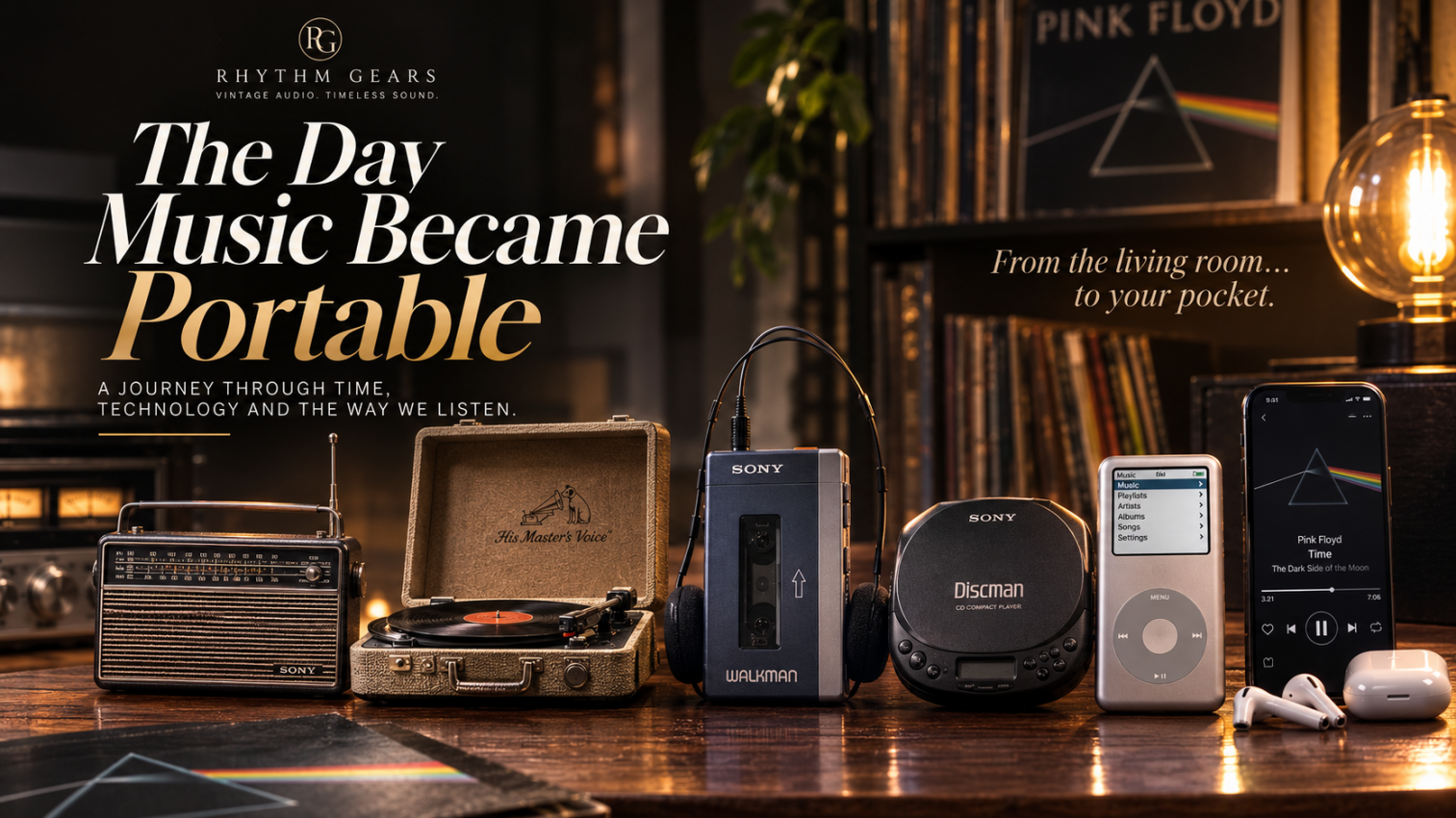
The Day Music Became Portable.
The Day Music Became Portable is a story about one of the biggest changes in the history of recorded music: the moment music stopped being tied to a room and became something we could carry with us. The article begins before portable music existed, when listening was a shared and physical experience. Music lived in living rooms, record collections, radio sets and Hi-Fi systems. A turntable or stereo was not simply an electronic device—it was part of the home. Listening required time, space and intention. From there, the story introduces the first major change: the transistor radio. Smaller electronics and the invention of the transistor made it possible to take radio beyond the living room. Music could now accompany people outdoors, on journeys and at work. For the first time, the listener didn't have to stay where the music machine was. The next chapter moves into portable record players and the changing culture of the 1950s and 1960s. Records were still physical and fragile, but manufacturers were beginning to understand that music could become personal and mobile. Then comes the revolution that truly changed everything: the compact cassette. Cassette technology didn't simply make music portable—it made music personal and recordable. People could create mixtapes, exchange music with friends, record radio broadcasts and decide exactly what they wanted to hear. The story can explore how the cassette transformed music from something you purchased into something you could curate and carry. Then we arrive at the Sony Walkman. This becomes one of the central moments of the article. The Walkman didn't invent portable music, but it changed the idea of personal listening. Suddenly, two people could walk down the same street while living inside completely different musical worlds. Headphones created a private listening space in public. This opens the cultural question: What happens when music stops being something we share and becomes something we carry privately? From there, the story moves into the CD era. Digital audio promised cleaner playback, greater convenience and smaller portable players. The Discman continued the idea of personal music while introducing a new generation to digital formats. Then comes another dramatic shift: MP3 and digital compression. For the first time, hundreds—and eventually thousands—of songs could fit inside a device that was smaller than a cassette case. Music was no longer limited by physical shelves or the number of records someone owned. Then comes the iPod. This is where portability becomes almost invisible. Instead of carrying a few albums, listeners could carry an entire music library. The relationship between people and their collections changed again. Finally, the story reaches the smartphone and streaming era. Today, an enormous portion of recorded music history can be accessed from a device already sitting in our pockets. There is almost no waiting, almost no physical limitation and very little need to own the music itself. And this is where the article turns.
The question is no longer how music became portable.
The question becomes: What did portability actually change? Music became easier to access. But did it become easier to appreciate? The article can explore how listening moved: From the living room → to the street → to the headphones → to the pocket → to the cloud. It can examine how portable music changed:
- The way people discover music
- The way people listen alone
- The relationship between music and travel
- The rise of headphones
- The decline of physical collections
- The mixtape and personal playlist culture
- The way younger generations experience older formats
- The disappearance of dedicated listening spaces
- The difference between hearing music and actively listening to music
Then comes the unexpected return.
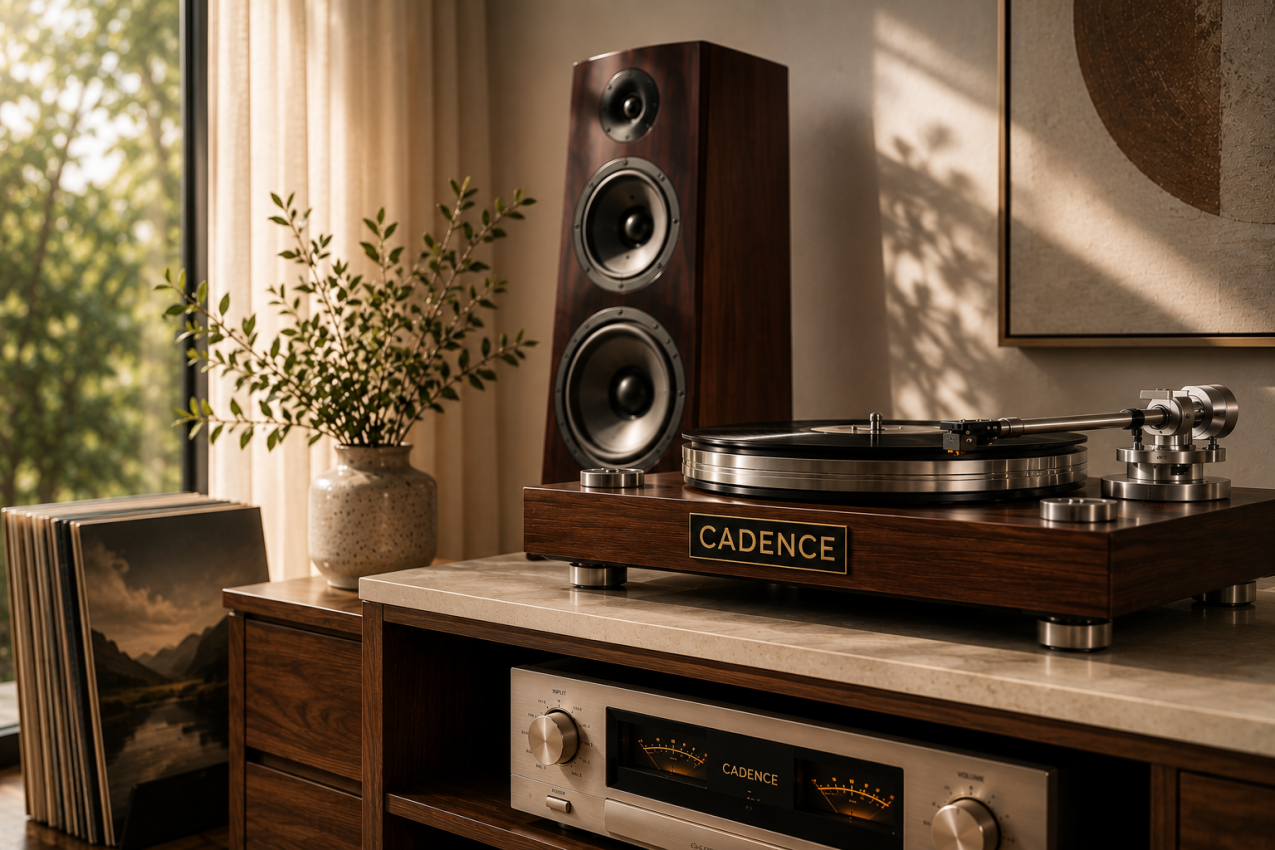
Despite having more convenience than any generation before it, people are once again buying vinyl records, turntables, cassette decks, headphones and dedicated Hi-Fi equipment. This isn't necessarily about rejecting technology. It may be about reintroducing intention into listening. A record has to be chosen. A turntable has to be operated. An album has to be played. A listening room asks you to stay. And suddenly, the story comes full circle. The technology that spent decades trying to remove music from the room may have accidentally created a desire to bring music back into the room.
We spent decades making music easier to carry. Perhaps the next chapter isn't about making music even more portable. Perhaps it's about remembering what it felt like to stop, sit down, and listen.
-
 September 7th, 2026
 -
 September 1st, 2026
 -
 July 19th, 2026