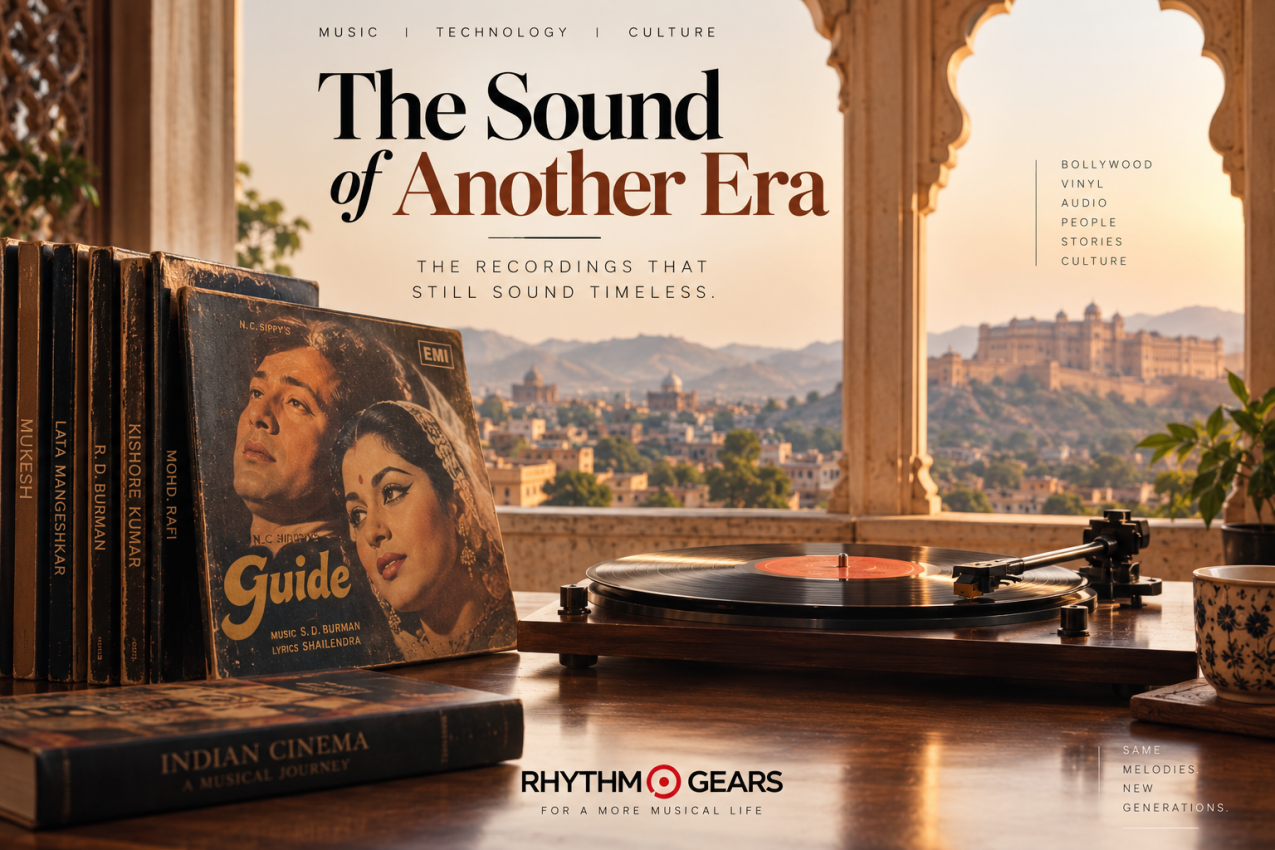
The Sound of Another Era.
The Sound of Another Era
Some songs don't simply belong to an era—they carry the sound of one. There is something unmistakable about the way many classic Bollywood recordings were made. The vocals feel natural, instruments have room to breathe, the bass supports rather than dominates, and the music can remain enjoyable long after the first play. Then comes the modern recreation: louder, heavier, brighter and engineered for today's listening habits. At first, it can sound spectacular. But listen for longer, and the experience can change. What makes a modern remix feel exciting in the first few minutes but tiring after repeated listening? Why can a decades-old original recording feel more balanced and effortless? And is what we call “better sound” actually better—or simply more sound ?
When Modern Production Changes the Character of a Classic
A remix is not simply an old song made new. Changes in EQ, bass response, treble, compression, limiting, stereo width and overall loudness can fundamentally alter the way we perceive familiar music. A deeper bass line can add impact. Brighter treble can reveal detail. Compression can make quieter elements more prominent. Wider stereo processing can create a bigger soundstage. But every improvement can come with a trade-off. When pushed too far, these techniques can reduce dynamics, introduce harshness, create distortion and turn an otherwise comfortable recording into something that demands too much attention from the listener.
The Science Behind Sound That Becomes Tiring
Our ears don't experience every frequency and every volume level in the same way. The relationship between frequency, loudness, dynamic range and human hearing plays an important role in listening comfort. Excessive low-frequency energy can make a mix feel heavy and congested. Too much high-frequency energy can make vocals, cymbals and percussion feel sharp or fatiguing. Heavy compression and limiting can remove the natural contrast between quiet and loud passages, creating a sound that feels constantly “on.” This is where the idea of listening fatigue becomes important. The question isn't simply whether a recording sounds impressive. It is whether your ears still want to hear it an hour later.
Bollywood Classics Meet the Remix Era
Bollywood provides some of the most interesting examples of this transformation. Songs such as “Masakali,” “Tamma Tamma Loge,” “Laila O Laila,” “Hawa Hawai,” “Ek Do Teen” and other classics have returned in modern forms, introducing familiar melodies to a completely different generation. Some recreations have successfully given old compositions a new identity. Others have faced criticism from listeners who felt that the modern production overshadowed the charm of the original. By placing original recordings beside their recreated versions, we can listen for the details that often go unnoticed: bass balance, vocal presence, treble energy, dynamics, stereo separation and overall musical space.
Nostalgia or Better Sound?
It is easy to dismiss our preference for older recordings as nostalgia. But nostalgia isn't the whole story. The way a recording is mixed, mastered and reproduced can have a measurable effect on how we experience it. Two versions of the same song can contain the same melody and lyrics yet create completely different listening experiences. One may demand your attention. The other may invite you to stay.
The Real Test of a Great Recording
Perhaps the ultimate test of sound quality isn't how impressive a song sounds through a speaker for thirty seconds. Perhaps it's whether you can put on the record, sit back, and still want to hear the next song an hour later. The Sound of Another Era takes a closer look at the evolution of Bollywood sound—from original recordings to modern remixes and remasters—and asks whether our pursuit of louder, deeper and clearer music has sometimes caused us to lose something far more difficult to recreate: musical character.
-
 September 1st, 2026
 -
 August 18th, 2026
 -
 July 19th, 2026