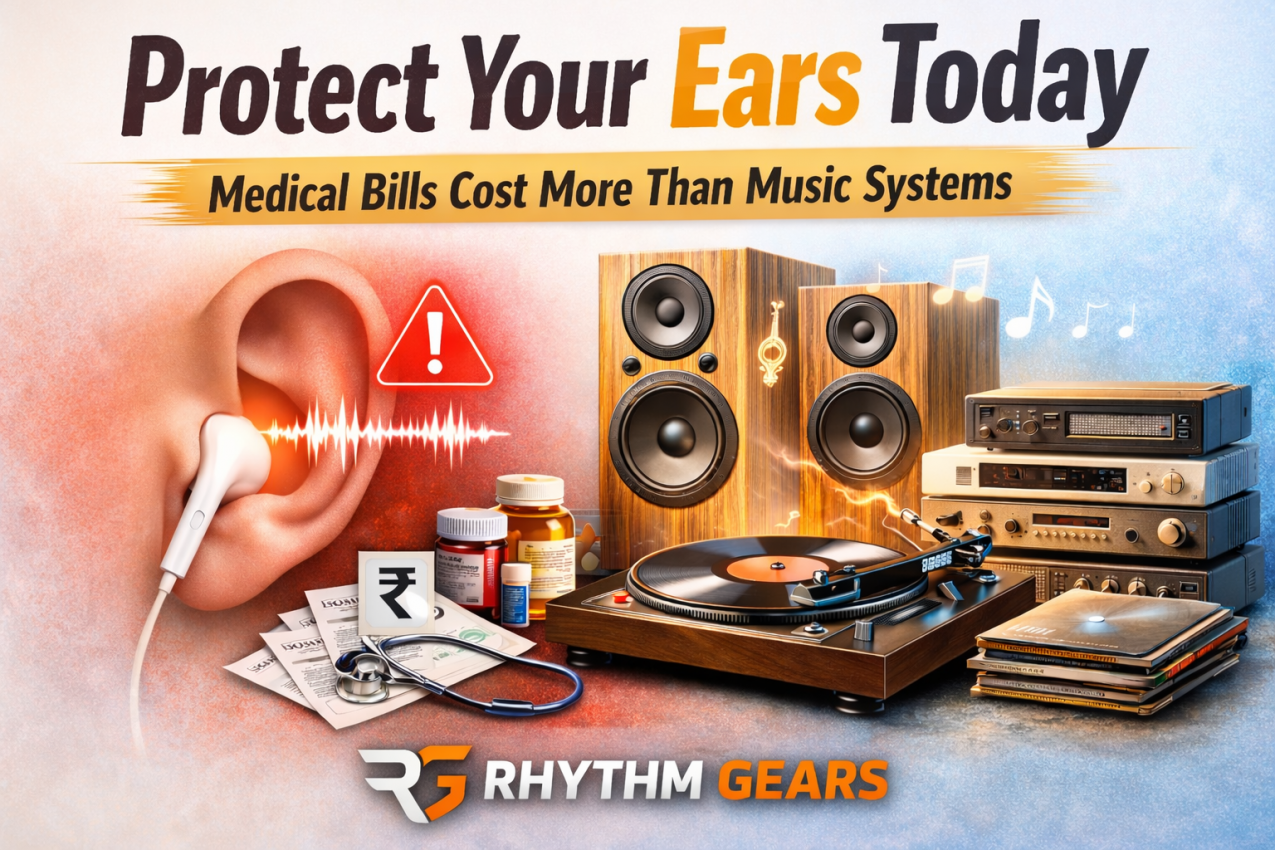
Protect Your Ears Today — Medical Bills Cost More Than Music Systems
Modern listening habits have silently increased hearing problems across all age groups. Prolonged use of earphones, headphones, and low-quality audio equipment exposes ears to high sound pressure, sharp frequencies, and digital distortion—leading to ear fatigue, tinnitus, and permanent hearing loss. This blog explains how earphones damage hearing, why medical treatment for ear issues is expensive, and how investing in quality audio systems like speakers, amplifiers, vinyl records, and cassette decks helps protect your ears naturally. Because ears cannot be replaced—but music systems can.
How Earphones and Headphones Cause Ear Health Issues
1. Direct Sound Pressure on the Eardrum
Earphones sit extremely close to the eardrum. Even at medium volume, sound pressure levels inside the ear canal become dangerously high. This leads to:
- Stress on inner ear hair cells
- Faster hearing fatigue
- Reduced sensitivity to low frequencies
Once these hair cells are damaged, they never regenerate.
2. Boosted High Frequencies (Treble Damage)
Most consumer earphones and headphones are tuned to sound:
- Sharp
- Bright
- Artificially detailed
High frequencies feel exciting initially but are the most harmful to human hearing. Long-term exposure causes:
- Ringing in ears (tinnitus)
- Difficulty understanding speech
- Sensitivity to sound
3. Digital Compression & Distortion
Streaming music + phone DACs + low-quality drivers result in:
- Compressed dynamics
- Harsh sound peaks
- Continuous loudness
Your ears never get rest between sounds, causing listening fatigue even at normal volume.
4. Longer Listening Sessions Without Realising
Because earphones isolate external sound, users:
- Listen for longer hours
- Increase volume unconsciously
- Ignore early warning signs
This accelerates long-term hearing damage.
Why Ear Treatment Is Expensive
Hearing damage is usually:
- Permanent
- Progressive
- Costly to manage
Medical expenses may include:
- ENT consultations
- Hearing tests
- Long-term medication
- Hearing aids
- Therapy for tinnitus
Treatment manages symptoms—but does not restore natural hearing.
Why Quality Audio Equipment Protects Your Ears
1. Natural Sound Reproduction
High-quality audio systems are designed for:
- Balanced frequencies
- Smooth highs
- Full-bodied bass
Music sounds complete even at lower volumes, reducing ear strain.
2. Low Distortion Playback
Good amplification and speakers deliver:
- Clean signal
- Accurate dynamics
- Minimal harshness
Your ears don’t struggle to decode sound.
3. Speaker-Based Listening Is Healthier
Listening through speakers allows sound to:
- Travel naturally in space
- Blend with room acoustics
- Reduce direct ear pressure
This mimics real-life sound, which the brain processes more comfortably.
Internal Linking: Better Alternatives to Earphones
Instead of constant headphone use, consider exploring:
- Speakers – Natural soundstage, reduced ear fatigue (https://www.rhythmgears.com/categories/speakers)
- Amplifiers – Clean power and distortion-free playback (https://www.rhythmgears.com/categories/amplifiers)
- Vinyl Records – Warm, dynamic, non-fatiguing analog sound (https://www.rhythmgears.com/categories/vinyle-records)
- Cassette Decks – Soft highs and smooth frequency response (https://www.rhythmgears.com/categories/cassette-deck)
These formats encourage quality listening over loud listening.
Why Cheap Audio Makes You Increase Volume
Low-quality audio lacks:
- Detail
- Bass depth
- Separation
Listeners compensate by turning volume up—damaging ears faster. Good audio delivers clarity at lower volume, protecting hearing.
Signs Your Ears Are Under Stress
If you notice:
- Ringing after listening
- Headaches or pressure
- Needing higher volume than before
- Loss of bass perception
These are early signs of hearing damage.
How to Protect Your Ears
- Limit earphone use
- Avoid treble-heavy tuning
- Take listening breaks
- Use speakers whenever possible
- Invest in clean audio equipment
Frequently Asked Questions (FAQs)
Q1. Are earphones more harmful than speakers?
Yes. Earphones deliver sound directly into the ear canal, increasing pressure and damage risk. Speakers allow natural sound dispersion.
Q2. Is loud music the only cause of hearing loss?
No. Distortion, sharp frequencies, and compressed sound damage ears even at moderate volumes.
Q3. Can hearing loss be reversed?
Most hearing damage is permanent. Medical treatment only manages symptoms.
Q4. Why does high-end audio feel smoother?
Because it has lower distortion, balanced frequencies, and natural dynamics—making it easier for ears to process sound.
Q5. Is investing in audio equipment worth it for health?
Yes. Quality sound reduces listening fatigue and protects hearing long-term.
Conclusion
Saving money on audio today can cost you heavily in medical bills tomorrow. Music systems can be upgraded, replaced, or sold—but ears cannot. Choose sound that respects your hearing. Protect your ears today—because medical bills cost more than music systems.
-
 September 7th, 2026
 -
 September 1st, 2026
 -
 August 18th, 2026
 -
 July 19th, 2026