Before You Buy Speakers: 7 Biggest Mistakes People Make (And How to Avoid Them)??.Don't tell anyone ?
Buying speakers looks easy until you actually start comparing options. One person says “buy this brand,” another says “bass is everything,” and then the specs start confusing you—watts, impedance, sensitivity, bookshelf, tower, vintage, new… it becomes a mess. The truth is simple: most people don’t buy bad speakers, they buy the wrong speakers for their setup.
This guide will help you avoid the most common mistakes so you can get clean vocals, balanced bass, better clarity, and a proper soundstage at home.
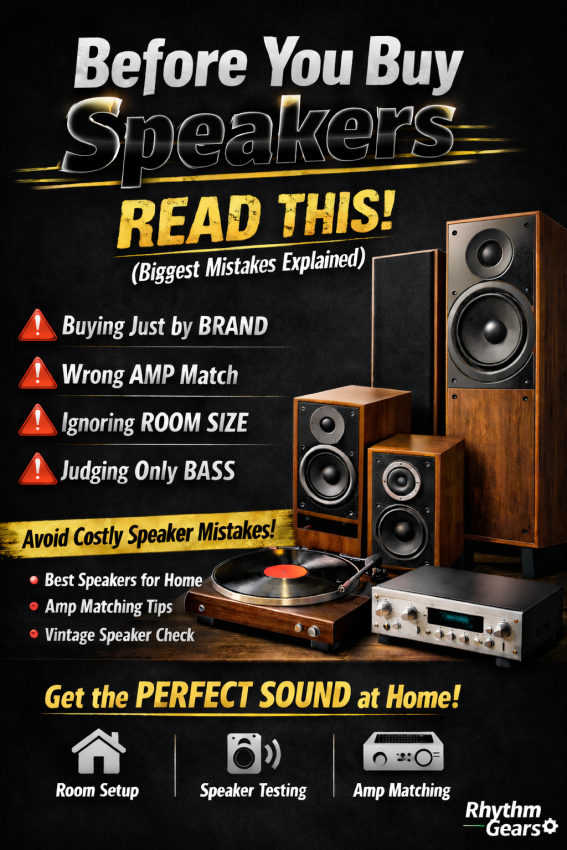
7 Biggest Speaker Buying Mistakes (And How to Avoid Them)
1) Buying Speakers Only Because of the Brand
Many people buy speakers just because a brand is popular or looks premium. But sound quality depends on the speaker model + your room + your amplifier, not the logo. Avoid this mistake by:
- Listening with your own playlist
- Comparing 2–3 options in the same price range
- Choosing based on sound signature (warm / neutral / bright)
2) Wrong Amplifier (AMP) Match
This is one of the biggest reasons speakers sound “average” even when they’re expensive. If your amplifier can’t control the speakers properly, you’ll hear:
- distortion at higher volume
- weak bass / muddy sound
- harsh treble
- low detail
Avoid this mistake by checking:
- speaker impedance (4Ω / 6Ω / 8Ω)
- amplifier output power
- sensitivity (how easily speakers get loud)
3) Ignoring Room Size (Very Common in India)
Room size matters more than most people think. A small room with large speakers can become boomy and uncomfortable, while a big room with small speakers can sound thin. Avoid this mistake by using a simple rule:
- Small room (Bedroom / office): bookshelf speakers
- Medium room (Living room): bookshelf + sub OR small floorstanding
- Large room (Hall / open space): floorstanding speakers
4) Judging Speakers Only by Bass
Many buyers test speakers with one bass-heavy song and decide instantly. But heavy bass can hide real problems like:
- unclear vocals
- weak midrange
- poor separation
- sharp treble fatigue
What you should listen for instead:
- vocal clarity (especially Arijit Singh, KK, Atif)
- instrument separation
- clean bass (tight, not booming)
- soundstage (wide and open feel)
5) Not Checking Speaker Sensitivity & Impedance
This is a technical point but extremely important. Sensitivity (dB) tells how easily a speaker gets loud.
- Higher sensitivity = easier to drive
- Lower sensitivity = needs more power
Impedance (Ohms) affects how hard the amplifier has to work.
- 8Ω is usually easier
- 4Ω can demand more current (amp must be capable)
Avoid this mistake by:
- choosing speakers that match your amp’s capability
- avoiding 4Ω speakers with weak amps
6) Not Testing Speakers Properly Before Buying
Many people test speakers for 30 seconds and finalize. That’s risky. Correct way to test speakers:
- play 3–5 different songs
- test low volume + medium + slightly loud
- listen for harshness and fatigue
- check if vocals stay clear when bass hits
Quick testing playlist idea:
- vocal track
- acoustic track
- bass track
- live performance track
7) Not Thinking About Future Upgrades
Good speakers stay with you for years. Your amp, source, and room may change later. If you buy speakers with no upgrade path, you’ll end up replacing them again. Avoid this mistake by choosing speakers that can grow with:
- better amplifier later
- DAC / streamer upgrade
- adding a subwoofer
- turntable + phono stage upgrade
To buy premium high-end speakers visit our website RHYTHM GEARS:https://www.rhythmgears.com/categories/speakers
Quick Speaker Buying Checklist
Before you buy, confirm:
✔ Room size and speaker type (bookshelf / tower)
✔ Amplifier power + impedance compatibility
✔ Sensitivity rating (easy to drive or not)
✔ Clarity and vocals (not just bass)
✔ Placement space available
✔ Test with multiple songs
✔ Future upgrade plan
FAQ'S
Q1. What should I check before buying speakers?
Room size, speaker type (bookshelf or floorstanding), amplifier compatibility (power + impedance), sensitivity, placement space, and sound clarity (not only bass).
Q2. What is the biggest mistake people make when buying speakers?
Buying speakers only for brand or bass and ignoring amplifier matching, room size, and proper testing.
Q3. How do I match speakers with my amplifier?
Check speaker impedance (4Ω/8Ω), sensitivity (dB), and your amp’s power output. A wrong match can cause distortion or weak sound.
Q4. Are bookshelf speakers better than floorstanding speakers?
Bookshelf speakers are best for small/medium rooms. Floorstanding speakers are better for larger rooms and higher volume listening.
Q5. Why do speakers sound different in different rooms?
Room size, wall reflections, furniture, and placement affect bass and clarity. Even expensive speakers can sound bad in the wrong room setup.
Q6. How can I test speakers before buying?
Play 3–5 different songs, test at low and medium volume, check vocals clarity, bass control, and if the sound feels comfortable over time.
Q7. Is more bass always better in speakers?
No. Good speakers give balanced sound—clear vocals, detailed mids, controlled bass, and a wide soundstage.
Q8. Should I buy vintage speakers or new speakers?
Vintage speakers can sound warm and musical, but condition matters. Always check drivers, foam surrounds, crossover, and cabinet health before buying.
-
 September 7th, 2026
 -
 September 1st, 2026
 -
 August 18th, 2026
 -
 July 19th, 2026