
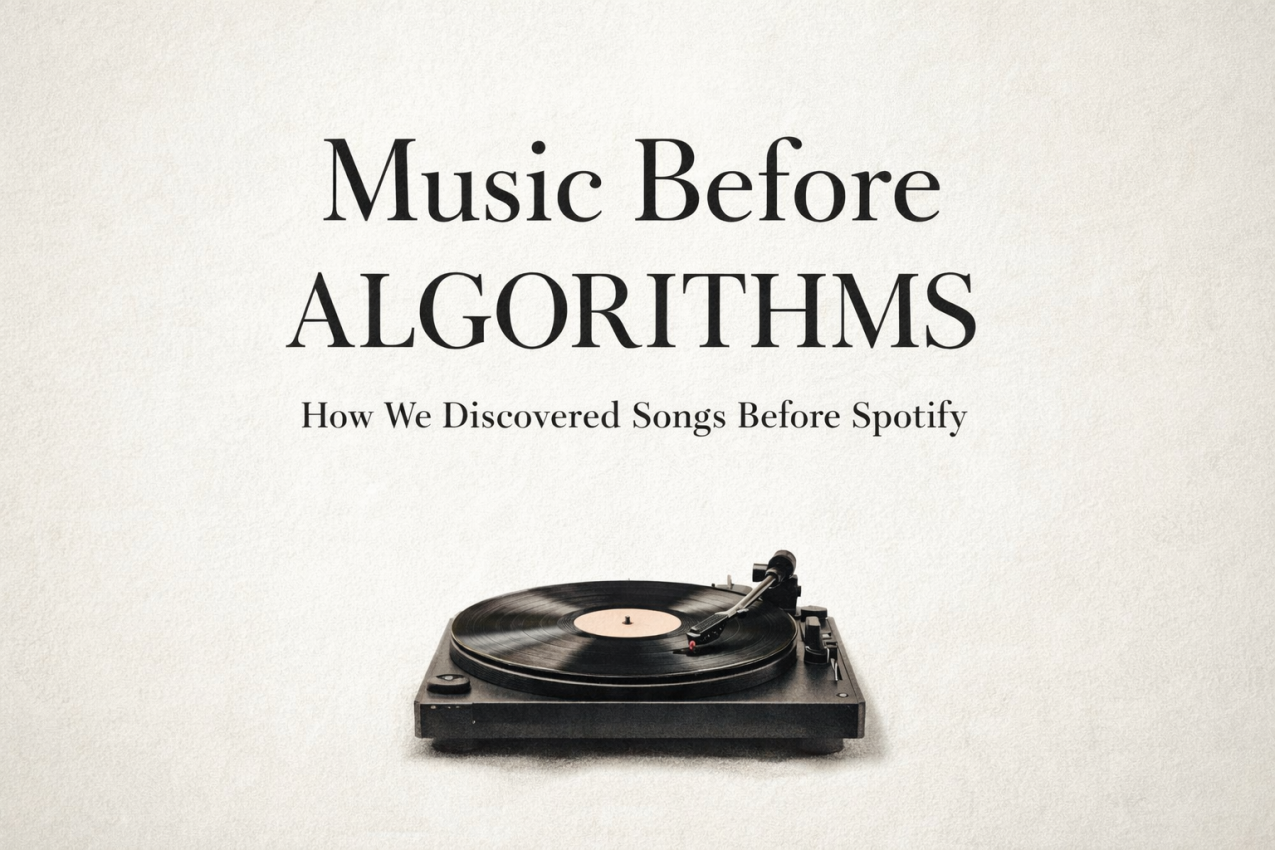
Music Before Algorithms: When Discovery Was Accidental
Music Before Algorithms
When Discovery Was Accidental
There was a time when music arrived unannounced. It slipped through open windows.
It travelled across terraces.
It leaked from radios balanced on kitchen shelves. No one had asked for it.
No one had searched for it. And yet, there it was.
The Summer of the Balcony Radio
In many Indian homes of the 80s and 90s, evenings began the same way. A balcony door would slide open.
Someone would adjust the antenna — slowly, carefully — chasing clarity through static.
A familiar radio jingle would cut through the hum of ceiling fans. Music didn’t begin instantly.
It emerged. There was always a few seconds of noise before the song settled into itself. That noise became part of the experience — like dust particles visible in late afternoon light. You didn’t choose the track. The track chose you. And because you had no control over what played next, every song felt like an event.
The Cassette Economy of Trust
Music also moved hand to hand. A cousin visiting from another city would arrive with a small plastic box full of cassettes. The labels were handwritten. Sometimes misspelled. Sometimes fading. You would sit cross-legged on the floor while the tape deck clicked open with a mechanical certainty that felt satisfying. “Listen to this one,” someone would say. That sentence carried weight. Discovery required trust. You were stepping into someone else’s taste — their interior world. Sometimes you loved what you heard. Sometimes you didn’t. But you listened fully. Skipping wasn’t casual. Rewinding took effort. So you stayed. And staying changed how songs settled inside you.
The Record Store as Geography
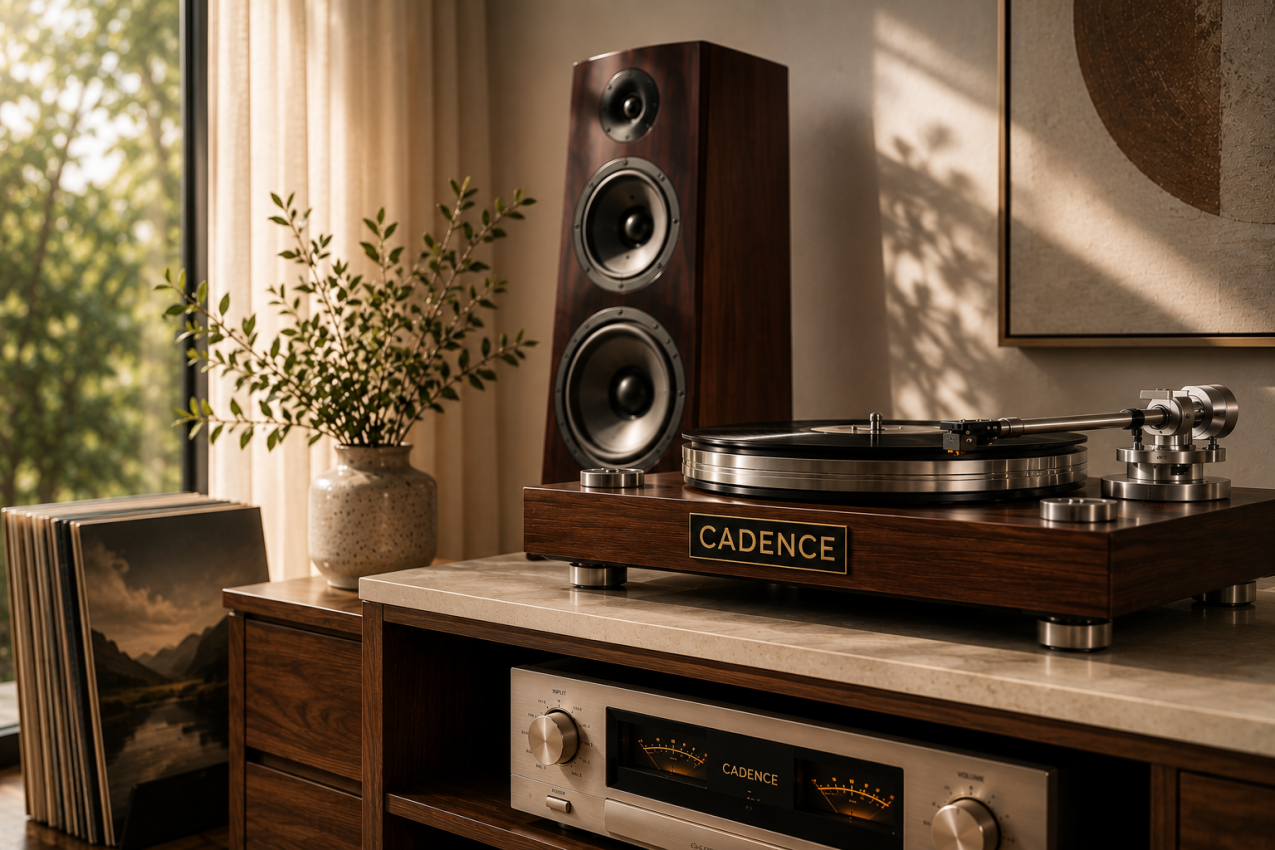
In certain neighborhoods, record stores were less about commerce and more about conversation. Stacks of vinyl leaned against each other like old friends. Film posters curled at the edges. The air smelled faintly of cardboard and magnetic tape. The shopkeeper was not an algorithm.
He was opinionated. He would say, “This composer is ahead of his time,”
or, “Side B is better than Side A.” Sometimes he was right. Sometimes he wasn’t. But his suggestions were shaped by mood, memory, instinct — not data. Music discovery was a human exchange.
Imperfect. Personal. Unpredictable.
Songs Without Names
There were songs you heard only once. At a wedding procession passing by.
On a bus ride through another town.
In the background of a film you barely remember. You caught only fragments. A line.
A melody curve.
A rhythm that stayed with you long after the sound faded. You tried to hum it to friends. “Do you know this one?” Sometimes they did. Often they didn’t. And the song remained unfinished in your mind — a small mystery tucked into memory. Today, we identify songs in seconds. Back then, some remained unsolved for years. And the unsolved linger longer.
The Sound of Patience
Discovery once required patience. Radio shows aired at fixed times. If you missed it, you missed it. Countdown programs became rituals. Entire families would sit together, listening not just for music, but for anticipation. When the desired song finally played, there was celebration — not outward, but internal. A quiet satisfaction. Scarcity made listening deliberate. You didn’t have infinite choice.
So you developed depth. You replayed the same album until you knew the faint inhale before the chorus. You memorized instrumental breaks. You learned songs not just as melodies, but as landscapes. Music wasn’t background. It was companion.
When Surprise Was Common
Algorithms today are precise. They learn your preferences, refine your feed, protect you from discomfort. You are rarely surprised by something completely outside your taste. But accidental discovery once disrupted comfort. You might walk into a shop looking for one film soundtrack and leave with a ghazal album you had never intended to buy. You might tune into the radio for a romantic song and hear a classical bandish instead — and stay, curious. Serendipity widened taste. It nudged you sideways. It introduced you to unfamiliar textures — folk, disco, devotional, protest — not because you asked for them, but because they happened to cross your path.
Memory Has a Location
Think of your earliest musical memory. It probably isn’t just the song. It’s the room.
The furniture.
The time of day. Music before algorithms attached itself to physical space. It belonged to rooms, to seasons, to gatherings. A monsoon evening had its soundtrack.
A summer vacation had another. Because music was not constant, it marked time. Now, when songs are always available, they sometimes lose their geography. They float. Earlier, they anchored.
The Quiet Shift
This isn’t about rejecting technology. Access today is extraordinary. Artists can reach audiences instantly. Forgotten songs can be rediscovered with a search bar. But something subtle changed. Discovery moved from wandering to being guided. From coincidence to prediction. From “What is playing?” to “What should I play next?” When music was accidental, it felt like encounter. Now, it feels like selection.
When Songs Felt Like Fate
There is a peculiar intimacy in believing a song found you by chance. That you happened to be near a radio at the exact moment it aired. That you borrowed a cassette randomly and it altered your taste permanently. That you stumbled into a melody that felt private — even though millions had heard it before. Accidental discovery gave music a mythic quality. It felt like fate, not formula.
Music before algorithms was slower.
Sometimes inconvenient.
Often unpredictable. But within that unpredictability was atmosphere. Static before clarity.
Waiting before reward.
Chance before certainty. And perhaps what we miss isn’t the old machines. It’s the feeling of being surprised. Of hearing something once — unexpectedly — and carrying it with you for years. Not because it was recommended. But because it happened.
Frequently Asked Questions (FAQs)
1. What does “music before algorithms” mean?
It refers to the time before streaming platforms and recommendation systems suggested songs based on user data. Music discovery happened through radio, cassettes, record stores, films, and word of mouth — not personalized digital feeds.
2. How did people discover music before Spotify and YouTube?
People discovered music through FM/AM radio, cassette exchanges, vinyl records, television programs, record shops, and social gatherings. Recommendations often came from friends, family, or radio jockeys instead of digital platforms.
Drop Us a Query
Recent Post
-
 September 7th, 2026
 -
 September 1st, 2026
 -
 August 18th, 2026
 -
 July 19th, 2026